
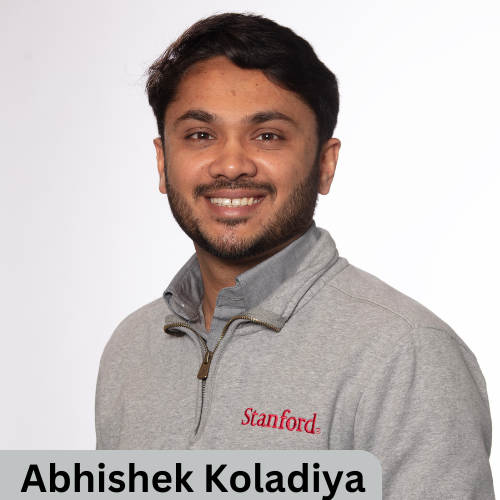
Abhishek Koladiya is a postdoctoral fellow at Stanford University. Abhishek’s research is focused on how signaling alterations at the single-cell level can impact healthy cells, contributing to the emergence of therapy-resistant populations in acute leukemias. Abhishek utilizes single-cell protein (CyTOF), RNA and chromatin profiling methods to develop relapse predictive machine learning models for identification of relapse associated cellular features. Prior to this Abhishek completed PhD from Charles University in Prague. During his doctoral training Abhishek developed multi-color flow cytometry assays and machine-learning algorithms to identify prognostic and predictive biomarkers linked with failure of stem cell transplantation and disease relapse in acute myeloid leukemia (AML) patients. Besides his research commitments, since October 2023, Abhishek is the chair of ISAC’s Data Committee. In his current role Abhishek leads the Data Committee’s efforts in FCS data standards and is developing benchmarking standards for evaluation of cytometry algorithms.
What inspired you to apply to the LDP or what are you looking forward to with the LDP?
I first learned about the ISAC Marylou Ingram Scholars Program (IMISP) during CYTO17-Boston and since then I followed this program closely. Through my interactions with former Marylou Ingram Scholars who are now successful researchers in their respected fields, I learned the importance of this program as it provides scientific and leadership experiences to early career scientists. As I aspire to be research group leader, I believe that the Marylou Ingram Scholars Program will provide me a unique opportunity to disseminate my research with the experts and pioneers in the field of cytometry and establish new collaborations which will enable me to achieve my scientific goals.
How did you get into Cytometry?
I got into cytometry during my doctoral training which was focused on deep phenotyping of immune and cancer cells. As I was beginner at that time I attended a workshop jointly organized by ISAC and Czech Society of Analytical Cytometry (CSAC) where I learned basic to advance modules of flow cytometry panel design. I also learned ISAC’s annual CYTO conference. In the following year, I received ISAC student travel award to present a poster at CYTO2017-Boston. I believe CYTO2017 was a turning point in my scientific career as I was introduced to the emerging technologies such as multi-parameter (>30) fluorescence-based flow cytometry and metal-based mass cytometry (CyTOF) and their applications in combination with machine learning algorithms to address biological questions.