
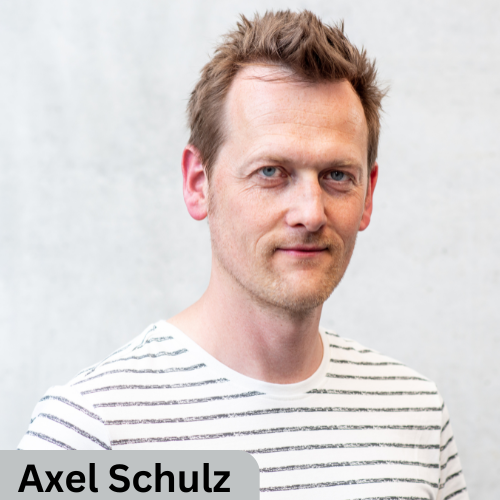
Postdoc
German Rheumatology Research Center, Berlin, Germany
Axel Schulz is a mass cytometrist at the German Rheumatism Research Center (DRFZ) in Berlin, Germany. His passion for this groundbreaking technology began during its early days and deepened during his time at the Human Immune Monitoring Core (HIMC) at Stanford University in 2013.Even earlier, during his PhD at Charité Berlin, he enjoyed exploring the human immune system at a systems biological level, particularly investigating the immune response in senior adults following yellow fever vaccination.
Axel’s lab not only provides mass cytometry to other scientists but is also heavily involved in reagent and assay development. One of the primary goals is to enhance this technology, enabling researchers to analyze more parameters with the highest possible standardization. Currently, he is actively involved in setting up large multi-center trials aimed at gaining a better understanding of the similarities and differences between chronic inflammatory diseases such as Multiple Sclerosis (MS), Systemic Lupus Erythematosus (SLE), and Crohn’s Disease. Axel is also interested in combining complex immune phenotyping with the host’s microbiome and the potential implication of this interaction in causing and shaping autoimmunity.
What inspired you to apply to the LDP or what are you looking forward to with the LDP?
It is a true honor for me to have been selected as an ISAC Marylou Ingram Scholar. I have been involved with ISAC since the early days of my career and have witnessed firsthand how the Leadership Development Program (LDP) has fostered and supported researchers in their careers as cytometrists. Now, being part of this prestigious program, I am looking forward to the many new networking opportunities with fellow scholars and at future CYTO conferences. Additionally, I hope to contribute to the society by participating in ISAC’s task forces, such as the data committee.
How did you get into Cytometry?
Doing mass cytometry, of course, is always a lot of fun, and finding solutions, like unclogging a completely messed-up nebulizer, is a task I thoroughly enjoy. After spending hours analyzing a 50-dimensional data object, I appreciate the down-to-earth labor of exchanging the dirty pump oil. But mass cytometry can sometimes be dangerous too. On one of my first days at the HIMC at Stanford, I was carefully overlaying a Ficoll gradient with blood. At that time, I didn’t know that the two CyTOF machines were supplied with argon from a huge liquid argon tank right next to me and the safety cabinet. While I was 100% focused on my Ficoll gradient, I suddenly heard a loud “gas explosion,” prompting me to immediately drop my pipette, run out of the lab covering my head, and thinking the building would collapse any moment. I was really bewildered when all my colleagues looked at me with amusement, as they already knew the typical sound of the tank releasing pressure.
Scientific Interest and Avenues for Collaboration: Mass cytometry, High-dimensional cytometry, research on autoimmunity, systems immunology
Participation / Support of ISAC: regular CYTO attendee, Co-chair at CYTO2024, would like to contribute more (This can be your involvement on a committee(s), CYTO conference involvement etc.)
Website/LinkedIn Profile Link:
www.drfz.de/en/forschung/cf/ag/zentrallabor-massenzytometrie/
https://orcid.org/0000-0002-5106-0148