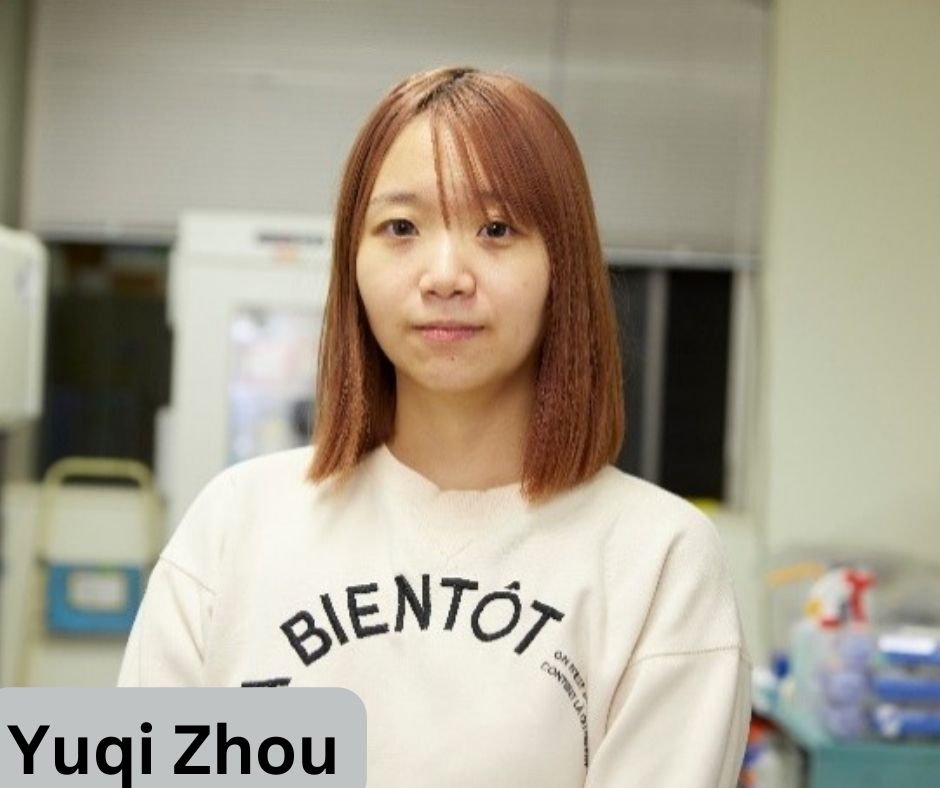
Yugi Zhou currently serves as an Assistant Professor in the Department of Chemistry at The University of Tokyo. Her area of expertise encompasses a unique combination of optical physics, image processing, and platelet biology. Zhou’s research primarily focuses on the early diagnosis and prediction of thrombotic conditions, with a special emphasis on both infection-induced and cancer-induced thrombosis. Zhou’s academic journey began with a Bachelor of Science degree, obtained in 2016 from the University of Illinois at Urbana-Champaign. Subsequently, she completed her Ph.D. at the University of Tokyo in 2022. “This academic path has been instrumental in shaping my career, particularly in managing collaborative research projects and publishing significant findings. These responsibilities have not only enhanced my analytical skills but also deepened my commitment to innovative scientific exploration. My role involves not just leading research initiatives but also actively contributing to the broader scientific discourse through publications and collaborations, further cementing my passion for groundbreaking scientific inquiry.” Zhou says.
What inspired you to apply to the LDP or what are you looking forward to with the LDP?
My inspiration to apply for the ISAC LDP stems from a deep-rooted commitment to advancing cytometry. I view the LDP as a pivotal platform that will enable me to become an influential leader within the ISAC community, contributing significantly to scientific advancements. I am particularly excited about the opportunities the program offers for developing leadership skills, pursuing scientific excellence, and fostering communication and collaboration. I look forward to organizing ISAC conferences, engaging in cutting-edge research projects, and initiating collaborative endeavors that span multiple disciplines. The LDP represents a unique avenue for extending my operational experience beyond the laboratory and enhancing my contribution to the cytometry field.
How did you get into Cytometry?
My initial interest in cytometry ignited during my Master’s studies at the University of Tokyo. This phase represented a pivotal shift in my academic journey, transitioning from a focused student to a pioneering researcher in the field. My undergraduate major in chemistry laid the foundation, where my fascination with analytical and physical chemistry, particularly spectroscopy, began. During my master’s studies, I became captivated by the analysis of cell content and morphology. Cytometry, with its high efficiency and ease of use for high-throughput cell study, emerged as an ideal tool that aligned with my interests. This newfound passion led me to concentrate my research on imaging flow cytometry, especially in the context of thrombotic condition diagnostics. The integration of my background in chemistry with optical physics, image processing, and platelet biology has created a unique multidisciplinary approach in my work. This blend of disciplines has not only refined my technical skills but also fueled a deep-seated drive to explore and expand the horizons of scientific research. My career trajectory has been enriched by collaborative projects and impactful publications, each playing a crucial role in my development as a scientist and as a leading figure in the cytometry community.